

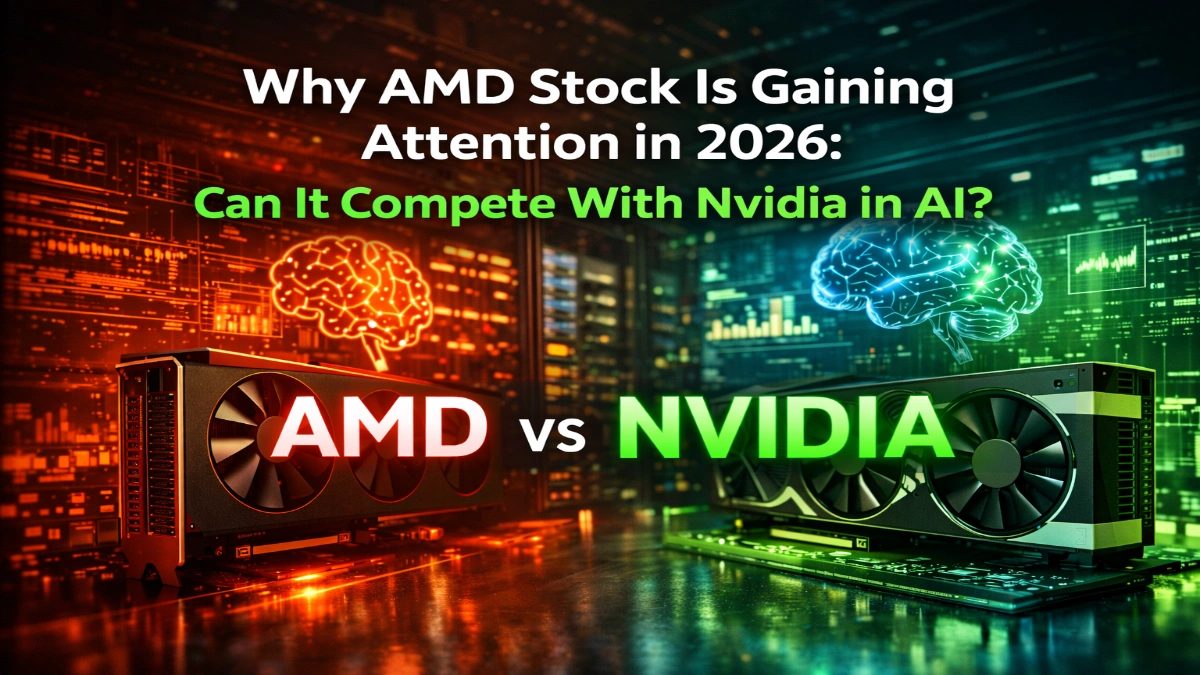
Why I’ve Changed My Mind About AMD Stock in the AI Era
Introduction
For a long time, I looked at AMD as the company that would always be one step behind Nvidia in AI.
It felt like Nvidia had already won the race before AMD even got close to the starting line. Nvidia was leading in GPUs, its software ecosystem was deeply embedded in AI development, and most of the industry seemed comfortable building around its technology. In comparison, AMD looked like the backup option — a company with potential, but not a real threat.
That used to be my view.
But the AI market is changing quickly, and after looking more closely at what’s happening, I think AMD deserves a lot more attention than I once gave it.
Nvidia Built Its Lead Early
Nvidia’s advantage in AI did not happen overnight.
Years before AI became mainstream, Nvidia made a smart move by launching CUDA, a platform that let developers use GPUs for much more than graphics. That gave researchers and engineers an easy way to build advanced computing applications, and AI became one of the biggest outcomes of that decision.
As AI development grew, CUDA became the foundation for much of the work being done across the industry. Developers learned it, companies adopted it, and Nvidia built an ecosystem that became incredibly difficult to challenge.
AMD, meanwhile, entered the GPU space through its ATI acquisition, but it did not build the same kind of software momentum. Its ROCm platform arrived much later, and early impressions were not great. Many developers saw it as difficult to use, less polished, and not worth the effort compared with staying in Nvidia’s world.
Because of that, AMD spent years looking like it was always trying to catch up.
The Environment Is Finally Starting to Shift
What changed my opinion is that AI development is no longer as locked into one ecosystem as it once was.
Today, more developers are using open and flexible frameworks that do not depend as heavily on CUDA. That matters a lot. When the software layer becomes more open, the hardware market becomes more competitive.
This is creating an opportunity for AMD.
At the same time, AMD has clearly improved ROCm. It is no longer being talked about in the same way it was a few years ago. The platform has matured, the tooling has improved, and AMD is now in a much better position to support real AI workloads.
That does not erase Nvidia’s lead, but it does make the market feel more open than before.
The Partnerships Are Hard to Ignore
Another reason I changed my mind is the quality of the companies now working with AMD.
When companies like OpenAI and Meta start making serious commitments, that gets my attention. These are not small customers testing a few chips in the background. These are major players in AI, and their involvement suggests AMD is becoming part of the real conversation.
What makes these partnerships even more important is that they go beyond simple hardware purchases. When companies commit at scale, they also commit to integration, support, and long-term ecosystem development. That helps AMD build credibility, improve adoption, and strengthen its position in the market.
In other words, these deals are not just about revenue. They are about validation.
And for AMD, that matters.
Inference Could Be a Bigger Opportunity Than Many People Expect
A lot of the AI story so far has centered on training large models. That is where Nvidia has been strongest, and it is one of the main reasons the company has become so dominant.
But AI is moving into a new phase.
More businesses now care about inference — the process of actually running AI models in products, services, and real-world applications. This side of AI is often more focused on cost, efficiency, and scale than on absolute top-end performance.
That shift could work in AMD’s favor.
If a company wants to deploy AI widely and keep costs under control, price-to-performance matters a lot. AMD’s hardware can become much more attractive in that kind of environment, especially if software compatibility keeps improving.
This is one of the biggest reasons I no longer see AMD as just an afterthought. The market is evolving in a direction where a lower-cost but capable alternative can win meaningful business.
AMD Also Has Another Advantage: CPUs
There is another part of this story that I think deserves more attention.
AI is moving beyond simple generation tasks. The next phase includes more advanced systems that can reason, make decisions, use tools, and complete tasks with greater independence. A lot of people describe this as agentic AI.
These systems do not rely only on GPUs.
GPUs are excellent for heavy parallel computation, but CPUs are still essential for coordination, logic, and system-level control. As AI systems become more complex and action-oriented, the role of CPUs could grow alongside GPUs.
That is important because AMD is not just a GPU company. It also has a strong position in CPUs, which gives it another path to benefit from AI growth.
This makes the broader AMD story more interesting than I once believed.
Why My View Has Changed
I used to think AMD would remain permanently stuck behind Nvidia in AI.
Now, I see a company that is starting to benefit from several real changes in the market. The software ecosystem is becoming more open. AMD’s platform is improving. Major technology companies are willing to work with it at scale. Inference is becoming more important. And the next phase of AI may increase demand for both GPUs and CPUs.
None of this means AMD will suddenly overtake Nvidia.
But it does mean AMD has a more realistic path to growth than many people may have assumed in the past.
Conclusion
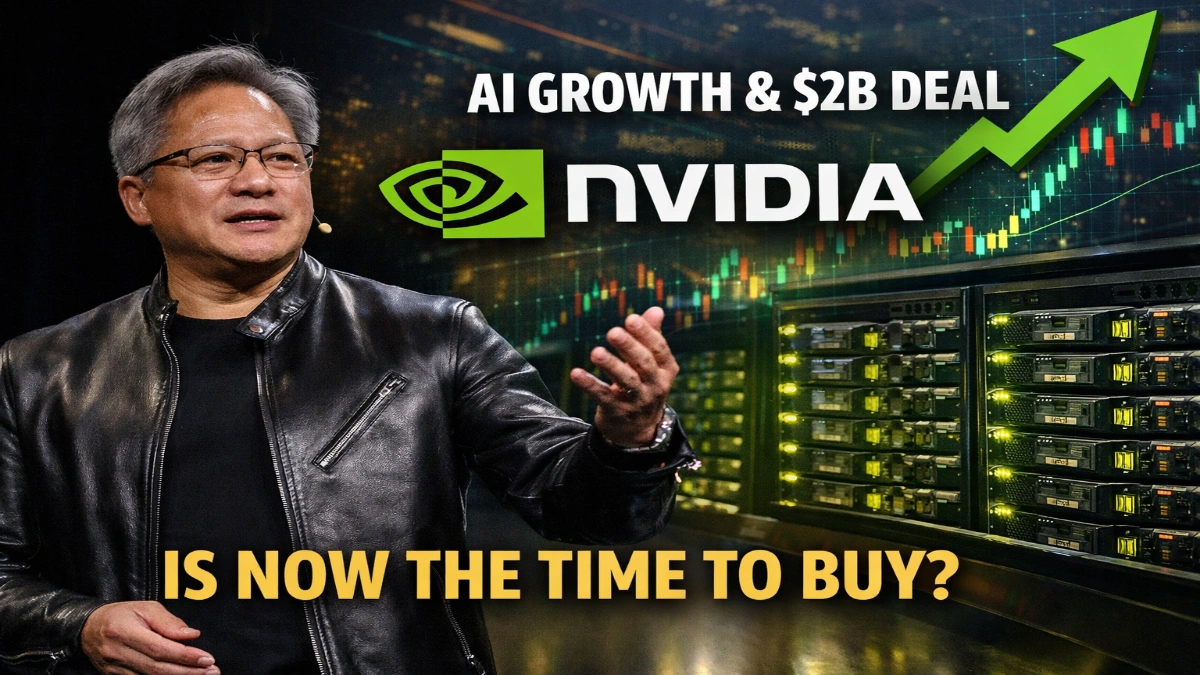
I still think Nvidia is the leader in AI, and that is unlikely to change in the near future.
But I no longer think AMD should be dismissed as a distant second with no real upside.
The AI market is growing fast, and it is becoming large enough to support more than one winner. AMD does not need to dominate the space to succeed. It simply needs to keep improving, keep winning business, and keep proving that it belongs in the conversation.
Right now, it looks like it is doing exactly that.



















Comments (0)
No posts yet
Be the first to comment!