

🧠 Introduction
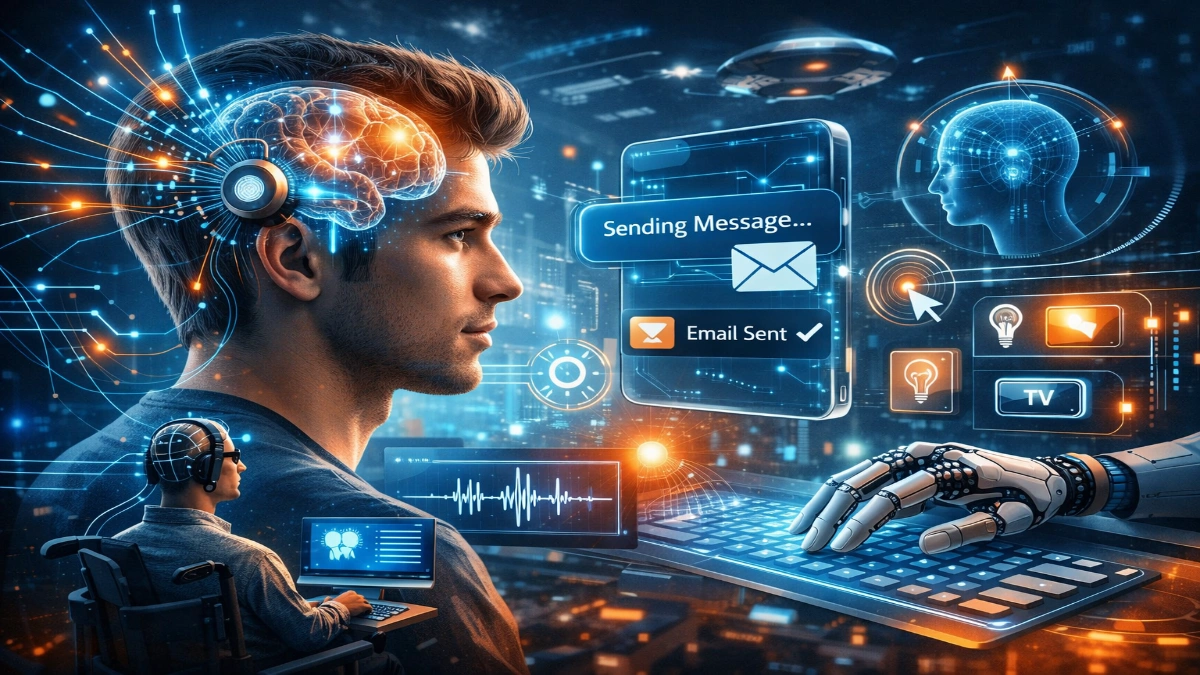
Imagine sending a text just by thinking about it. Or controlling your phone without touching it at all. Sounds wild, right? But brain technology is creeping closer to making these kinds of ideas real.
Right now, scientists and tech companies are teaming up, trying to hook our brains directly to computers in ways we’ve never seen before.
A lot of people in tech call this the next big leap.
⚡ What Is Brain Technology?
So, what’s brain technology, exactly? You’ll hear people call it a brain-computer interface, or BCI for short.
Basically, it’s a way for your brain to talk straight to a device. No hands, no voice commands—just your thoughts doing the work.
Let’s say you want to move a mouse cursor. With a BCI, you can do it just by focusing your thoughts, not by reaching for the mouse or tapping keys.
🚀 Everyday Use in the Future
And this isn’t just about cool gadgets. BCIs could sneak into daily life way sooner than you might think:
You’d control your phone just by thinking.
Send a message instantly—no typing, no screen.
Turn on the TV or the lights without needing to speak or press anything.
Just picture relaxing on the couch and flipping on the TV with your mind.
🏥 Impact on Healthcare
Health care might be where brain technology makes its biggest impact. This stuff can give new options to people who can’t move or talk:
A person who’s paralyzed could communicate with the world through a device that decodes brain signals into speech.
Doctors could catch brain disorders much earlier.
Someone recovering from injury could get more personalized help.
For millions, these advances would be nothing short of life-changing.
💼 Work and Productivity
Work is another area that could see a big shakeup. Think about how much time we waste typing or fiddling with tech.
If you could just send emails or messages using your mind, work would move a lot faster—and you’d probably pay better attention, too.
🌐 Future Possibilities
It doesn’t stop there. In the future, brain tech could let us communicate brain-to-brain. Sharing memories. Learning faster than ever. Maybe even jumping into digital worlds in ways we haven’t even dreamed of.
⚠️ Challenges and Concerns
It’s not all upside, though. BCIs raise some big questions:
How do we keep our brain data private?
Who decides what’s ethical?
Could all this tech be misused?
We have to pay attention to these issues if we want to build technology that helps rather than harms.
🔮 Final Thoughts
So, bottom line: brain technology could flip the way we interact with our devices—and each other—on its head.
Stuff that once felt like science fiction is creeping closer to reality. Sure, there are hurdles, but the potential here is massive.
It’s not just about smarter phones or computers—it’s about rewiring the very connection between people and technology.

















Comments (0)
No posts yet
Be the first to comment!