


AI Agent Workforce: How AI Agents Are Reshaping the Future of Work in 2026
Artificial intelligence has already fundamentally transformed how businesses operate, but as we navigate through 2026, a massive shift has moved from the fringes of tech into the mainstream corporate world: the AI Agent Workforce.
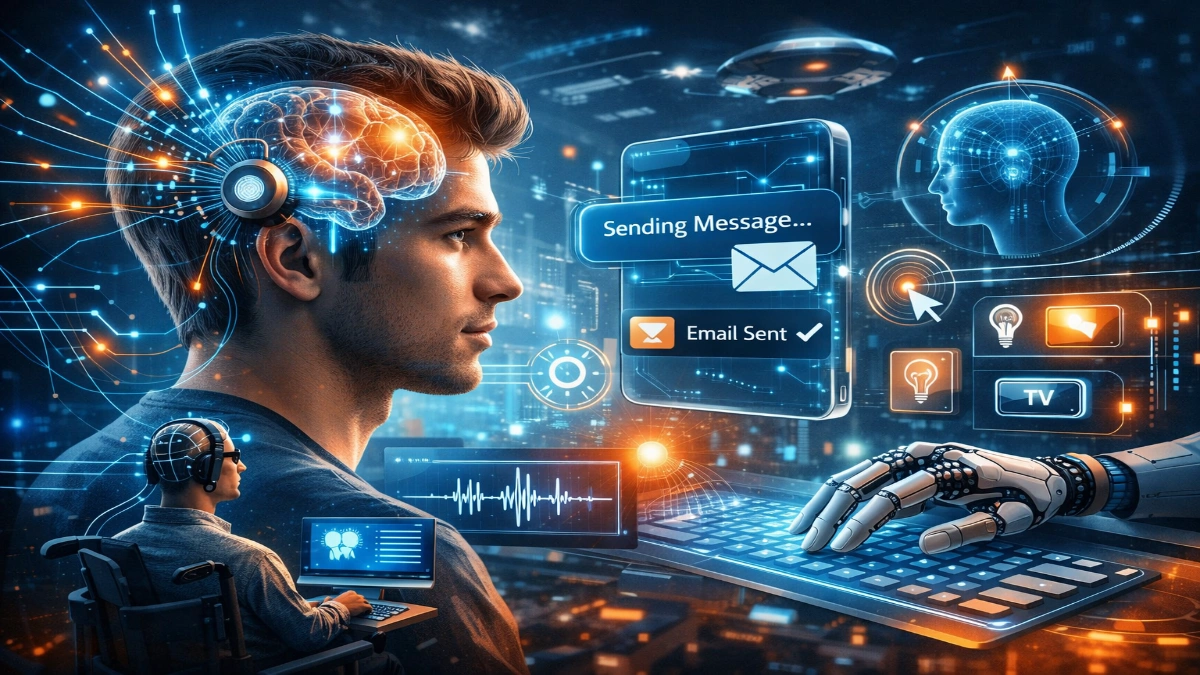
If 2024 was the year of asking, "Are AI agents real?" and 2025 was about asking, "Are they ready?", then 2026 is definitively the year of scale, governance, and enterprise deployment. We have moved far beyond traditional AI tools that perform single, isolated tasks or simply generate text in a chat window. Today’s AI agents are autonomous digital coworkers. They can independently plan complex workflows, make context-aware decisions, collaborate with other software systems, and continuously improve their performance based on real-world outcomes.
From customer support and finance to software development and supply chain logistics, AI agents are stepping in to handle the operational heavy lifting. Businesses of all sizes are rapidly discovering how these intelligent systems can skyrocket productivity, slash operational bottlenecks, and free up human teams to focus on high-value, strategic work.
In this deep dive, we will explore exactly what an AI Agent Workforce is, how the technology operates under the hood, the undeniable benefits, the genuine challenges, and what the future holds as hybrid human-AI teams become the new standard.
What Exactly Is an AI Agent Workforce?
An AI Agent Workforce refers to a coordinated network of autonomous artificial intelligence systems designed to execute tasks traditionally managed by human employees. Rather than requiring constant hand-holding or strict rule-based programming (like older Robotic Process Automation tools), these agents are given a goal, and they figure out how to achieve it.
Unlike basic chatbots that simply fetch answers to questions, modern AI agents possess "agentic capabilities," meaning they can:
Plan and reason: Break down a massive, ambiguous goal into a logical sequence of multi-step tasks.
Use tools: Seamlessly communicate with external software applications via APIs.
Analyze and adapt: Process large datasets in real-time and pivot their strategy if an interface changes or an error occurs.
Operate continuously: Work 24/7 without fatigue, context switching, or burnout.
The 2026 Reality Check: Imagine you need a weekly sales performance summary. You don't have to pull the data from your CRM, put it into a spreadsheet, create a chart, and draft an email. Instead, an AI agent takes the prompt "Generate a weekly sales report and send it to the management team." It logs into Salesforce, pulls the relevant metrics, cross-references them against historical data in your ERP, generates a visual dashboard, drafts an executive summary, and hits send—all without human intervention.
Why the AI Agent Workforce Is Exploding in 2026
Several intersecting technological and economic advancements have fueled the explosive rise of AI agents this year. Gartner recently projected that by the end of 2026, 40% of enterprise applications will embed task-specific AI agents. Here is why the adoption curve is going vertical:
1. The Leap to "Agentic" Language Models
Modern foundation models have evolved past simple text generation. They now possess deep reasoning capabilities, advanced logic, and the ability to maintain long-term memory (often using vector databases). This allows them to handle complex logic puzzles and judgment calls that previously required human cognitive effort.
2. Deep Enterprise Integration
AI agents are no longer siloed in web browsers. Through platforms like Microsoft Copilot Studio, Salesforce Agentforce, and custom open-source frameworks, agents now connect directly into the central nervous system of a business. They plug into CRMs, email platforms, project management tools, databases, and HR systems. Because they can read and write data across these platforms, they do actual, measurable work.
3. The Productivity Imperative
Organizations in 2026 face a tough paradox: business processes are growing more complex, but tolerance for manual, slow execution has vanished. Employees are losing countless hours to "work about work"—hunting for data, switching between apps, and doing repetitive administrative tasks. AI agents reclaim this lost productivity, functioning as a high-speed execution layer for mundane workflows.
4. Economic Efficiency and TCO
As the cost of API calls and processing power continues to drop, the Total Cost of Ownership (TCO) for deploying an AI agent has become highly favorable. Automating a repetitive workflow with an agent offers immediate, measurable cost reductions compared to traditional manual routing.
How AI Agents Actually Work Under the Hood
While it might look like magic, the architecture of an enterprise AI agent generally follows a logical, highly structured cognitive loop:
Goal Understanding: The agent receives a natural language objective and interprets the intent behind it.
Reasoning and Planning (The Brain): The AI breaks the primary objective down into a sequential roadmap of smaller tasks. It decides what tools it needs to use and in what order.
Execution and Tool Use (The Hands): The agent interacts with connected enterprise systems. It might query a database, trigger a web search, or send an API request to a billing platform to process a refund.
Memory and Optimization: Using short-term memory (the current context) and long-term memory (historical enterprise data), the agent evaluates its success. If a step fails, it reasons through the error and tries an alternative route.
This ability to dynamically plan, act, and self-correct is the defining characteristic that separates true AI agents from basic automation scripts.
Real-World Applications Transforming Industries
The theoretical hype has faded; in 2026, we are seeing hard, tangible use cases across virtually every department.
Customer Support & Experience
Contact centers are undergoing a massive shift. AI agents are intercepting and autonomously resolving tier-1 and tier-2 tickets—processing refunds, tracking lost orders, and updating account details. By absorbing the simple, repetitive contacts, human support agents are freed up to handle the complex, emotionally charged, and high-stakes escalations that require genuine empathy and negotiation.
Finance and Operations
The financial sector has heavily embraced multi-agent systems. AI agents are used for real-time fraud detection, automated invoice reconciliation, and Know Your Customer (KYC) compliance. They act as always-on, audit-ready analysts that reduce human error in highly regulated environments.
Sales and Marketing
Marketing and revenue teams use AI agents as autonomous growth engines. An agent can score inbound leads based on engagement signals, route them to the correct human representative, generate highly personalized email sequences, and autonomously adjust ad spend based on real-time campaign performance across multiple channels.
Software Engineering & IT
The concept of "vibe-coding" and AI-assisted engineering has matured. Development teams use AI agents to autonomously review pull requests, identify and patch basic security vulnerabilities, generate boilerplate code, and resolve routine internal IT support tickets (like password resets or software provisioning).
Human Resources
HR teams are deploying agents to manage the heavy administrative lift of recruitment. Agents screen incoming resumes against ideal candidate profiles, autonomously schedule interviews by reading calendars, and walk new hires through complex, multi-week onboarding workflows, answering their policy questions along the way.
The Undeniable Benefits of an AI Workforce
Deploying AI agents isn't just a tech upgrade; it’s a fundamental redesign of enterprise capability.
Hyper-Productivity: By removing friction and administrative drag, human employees can dedicate their mental energy to strategy, creative problem-solving, and relationship building.
24/7 Scalability: Unlike human teams that require sleep, shift changes, and weekends, an AI agent workforce operates continuously. Businesses can scale up their operational capacity during peak seasons without a massive hiring sprint.
Faster, Data-Driven Decisions: Agents can ingest, synthesize, and analyze millions of data points in seconds, providing leaders with real-time, actionable insights rather than waiting weeks for a human-compiled report.
Process Consistency: AI agents follow compliance protocols and workflows the exact same way every single time, drastically reducing human error in areas like data entry and legal contract review.
Roadblocks and Challenges Businesses Must Navigate
Despite the incredible potential, deploying autonomous agents into live enterprise environments comes with serious hurdles.
Data Governance and Security
Giving an AI agent "read and write" access to your CRM or financial systems is inherently risky. Organizations must establish strict role-based access controls, robust audit logs, and compliance with frameworks like SOC 2, HIPAA, or GDPR.
The Hallucination Risk
If an AI agent misunderstands a prompt or "hallucinates" a fact, it might take the wrong action—like sending an incorrect email to a client or misrouting a payment. Ensuring agents are strictly grounded in verified enterprise data (often through Retrieval-Augmented Generation, or RAG) is a constant priority. Human oversight remains mandatory for critical workflows.
The Transformation Paradox
A major trend in 2026 is that employees are often adopting AI faster than their companies can build safe structures for it. Employees want to use these tools to move faster, but without clear, top-down governance, businesses risk creating fragmented, unsecured "shadow AI" networks.
Workforce Adaptation and Burnout
As AI absorbs the easy, repetitive tasks, the work left for humans becomes denser and more complex. For example, if a customer service representative is only handling escalated, angry customers all day because the AI handled the easy ones, burnout risk skyrockets. Companies must redesign roles, coaching, and metrics to support their human teams.
Will AI Agents Replace Human Workers? The 2026 Verdict
The anxiety surrounding job replacement is valid, but the 2026 reality is far more nuanced. We are not seeing a mass replacement of the human workforce; we are seeing a reallocation of human value.
AI agents excel at execution, scale, and predictability. Humans excel at ambiguity, emotional intelligence, strategic leadership, and creative context. The most successful organizations are building hybrid human-AI teams.
Instead of an AI agent replacing a marketing manager, the agent becomes the manager's direct report. The manager acts as the "orchestrator"—setting the strategy, reviewing the agent's output, and making the final judgment calls. The future belongs to professionals who learn how to effectively collaborate with, audit, and direct AI systems.
How Forward-Thinking Businesses Are Preparing Today
If your organization is looking to integrate an AI agent workforce, waiting on the sidelines is no longer a viable strategy. Here is how to safely cross the production gap:
Identify High-Friction Bottlenecks: Don't automate for the sake of automation. Look for processes that are data-heavy, highly repetitive, and prone to manual delays.
Run Structured Pilots: Start with a "human-in-the-loop" approach. Let the agent draft the work, but require a human to click "approve" before any action is taken.
Invest in an Agent Control Plane: Implement centralized governance tools that allow IT and security teams to monitor what every agent is doing, trace their decisions, and revoke access instantly if needed.
Upskill Your People: Train your workforce not just on how to prompt AI, but on "Agent Orchestration"—the skill of managing digital coworkers, evaluating their logic, and catching edge-case errors.


















Comments (0)
No posts yet
Be the first to comment!