Silicon-Carbon Batteries: The Quiet Tech Upgrade Powering Your Phone in 2026
If there's one thing that hasn't really changed about smartphones over the years, it's this: we're all still a little anxious about the battery icon turning red. Faster chips, sharper cameras, smarter AI features — none of it matters much if your phone dies by 6 PM.
That's finally starting to shift. The reason is a technology called silicon-carbon battery tech, and it's quietly becoming one of the most talked-about advancements in consumer electronics this year.
A growing number of smartphone makers are building it into their newest devices, and for good reason — it packs in more energy, charges faster, and does it all without making phones bulkier. Battery performance has turned into one of the biggest deciding factors when people choose a new phone, right up there with camera quality and price.
So What Exactly Is a Silicon-Carbon Battery?
To understand why this matters, it helps to know what's changing under the hood.
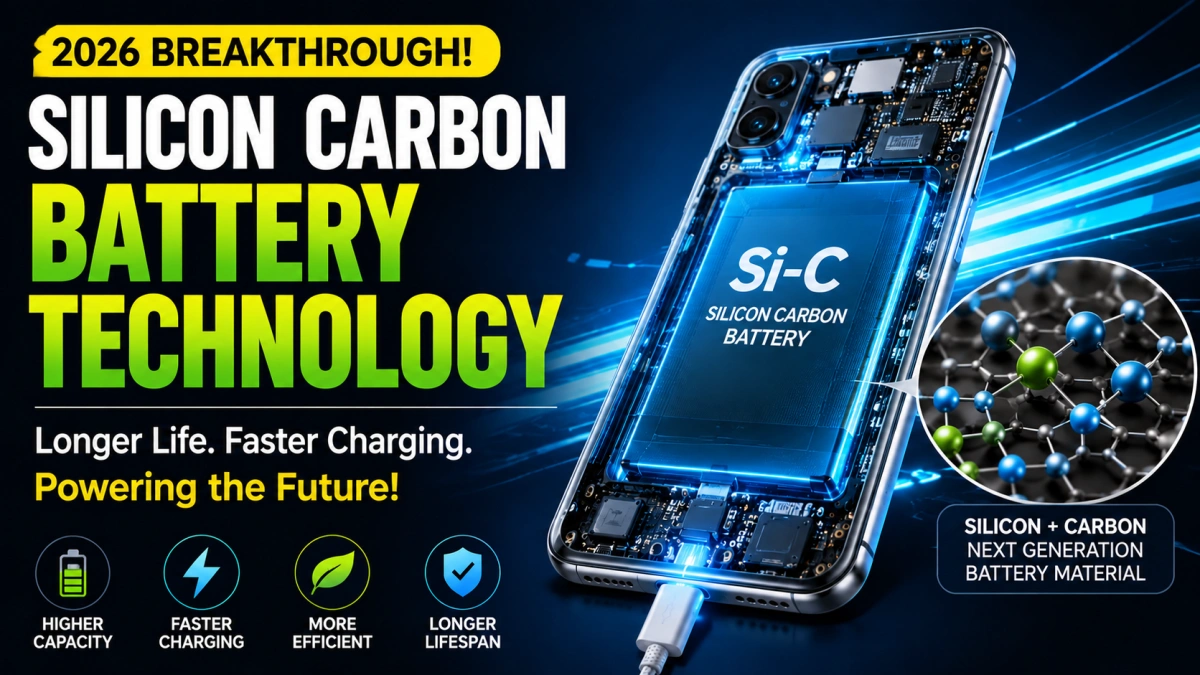
Most lithium-ion batteries use graphite inside the anode — the part of the battery that stores lithium ions during charging. Silicon-carbon technology swaps out part of that graphite for silicon-based material instead.
It sounds like a minor tweak. It isn't.
Silicon can hold a lot more lithium than graphite can, which means the battery stores more energy in the same amount of space. In practical terms, that translates to a few clear wins:
Bigger battery capacity
Longer runtime between charges
Quicker charging
Slimmer, lighter phones
Phone makers basically get to choose: stuff more battery into the same size phone, or keep the same battery life while making the phone thinner. Either way, the user comes out ahead.
Why Is Everyone Suddenly Talking About This?
Phones today are doing a lot more than they used to. Between on-device AI, high-end gaming, 5G, and camera systems that practically edit photos in real time, modern smartphones are power-hungry in a way they weren't even five years ago.
Traditional batteries have been struggling to keep up. Silicon-carbon tech is one of the more realistic fixes available right now — not some far-off lab experiment, but something actually shipping in phones on store shelves.
It's part of why several flagship phones launched this year are packing 6,000mAh+ batteries while still managing to stay thin enough to fit comfortably in a pocket.
The Real Benefits, in Plain Terms
Longer battery life. This is the one people notice first — more screen time, longer gaming sessions, and no more babysitting a charging cable through the day.
Faster charging. Silicon-carbon batteries pair well with rapid-charging tech, so some phones can go from low battery to mostly full in well under an hour.
Smarter use of space. Since silicon stores more energy per square inch than graphite, manufacturers aren't forced to choose between "big battery" and "thin phone" anymore. They can have both.
Room to keep improving. This isn't even the finished version of the technology. Researchers are still refining it, which means future phones could push energy density and charging speed even further.
Why This Matters for Phones Specifically
Smartphones are probably the single biggest winner here. Ask anyone what frustrates them about their phone, and battery life is almost always near the top of the list — sometimes above the processor, sometimes above the camera.
A fast chip is great, but it doesn't mean much if the phone can't survive a full day of use. Silicon-carbon batteries tackle one of the industry's oldest and most stubborn complaints head-on.
It's especially relevant now that AI features have become a standard part of phones — voice assistants, real-time photo editing, on-device generation. All of that draws extra power, and a better battery is what makes it sustainable to use these features without constantly worrying about runtime.
It's Not Just About Phones — EVs Could Benefit Too
Smartphones get most of the spotlight, but electric vehicles stand to gain just as much, if not more.
Driving range is still one of the top concerns for EV buyers, and silicon-carbon battery tech lines up well with what the auto industry is chasing:
Longer range per charge
Faster charging stops
Better overall efficiency
Lighter battery packs
EV adoption of this tech will likely take longer than it has in phones — automotive testing and safety requirements are a different beast — but the research direction is promising, and it's a space worth keeping an eye on.
It's Not All Smooth Sailing Yet
Like most emerging tech, silicon-carbon batteries aren't perfect out of the gate.
Cost. Producing these advanced materials currently costs more than sticking with plain graphite, which can trickle down into device pricing.
Long-term durability. Engineers are still working out how these batteries hold up over hundreds (or thousands) of charge cycles compared to older designs.
Scaling production. Going from "promising lab result" to "millions of units on store shelves" is never simple, and manufacturers are still working through the logistics of scaling this up affordably.
None of these are dealbreakers — they're the normal growing pains of any new battery tech finding its footing. Progress here has been moving fast.
Why This Is a Bigger Deal Than It Sounds
A lot of tech headlines are still chasing the next big software feature or AI model. But for the average person, battery life affects daily life more directly than almost anything else a phone can offer.
Longer battery life means less charging anxiety. It means your phone survives a full travel day without you hunting for an outlet in an airport. It means using your phone the way you actually want to, without constantly checking how much juice is left.
That's exactly why battery technology has quietly turned into one of the biggest selling points for new devices — even if it doesn't always make the flashiest headline.
What's Next for Battery Tech
Silicon-carbon isn't the only battery innovation in the pipeline. Researchers are also exploring solid-state batteries, next-gen lithium chemistries, and more sustainable battery materials overall.
Out of all of these, though, silicon-carbon technology looks like one of the most realistic options to scale commercially in the near term — and most analysts expect to see it show up in even more devices as the year goes on.
The Bottom Line
Silicon-carbon battery technology might not be the flashiest headline in tech right now, but it's solving a problem that actually affects people every single day. More capacity, faster charging, and slimmer designs — all without the trade-offs that used to come with chasing bigger batteries.
While AI and software updates will keep grabbing attention, it's entirely possible that a better battery ends up mattering more to how people actually use their phones. As this tech keeps maturing, expect devices that last longer, charge quicker, and finally stop making battery anxiety part of the daily routine.