

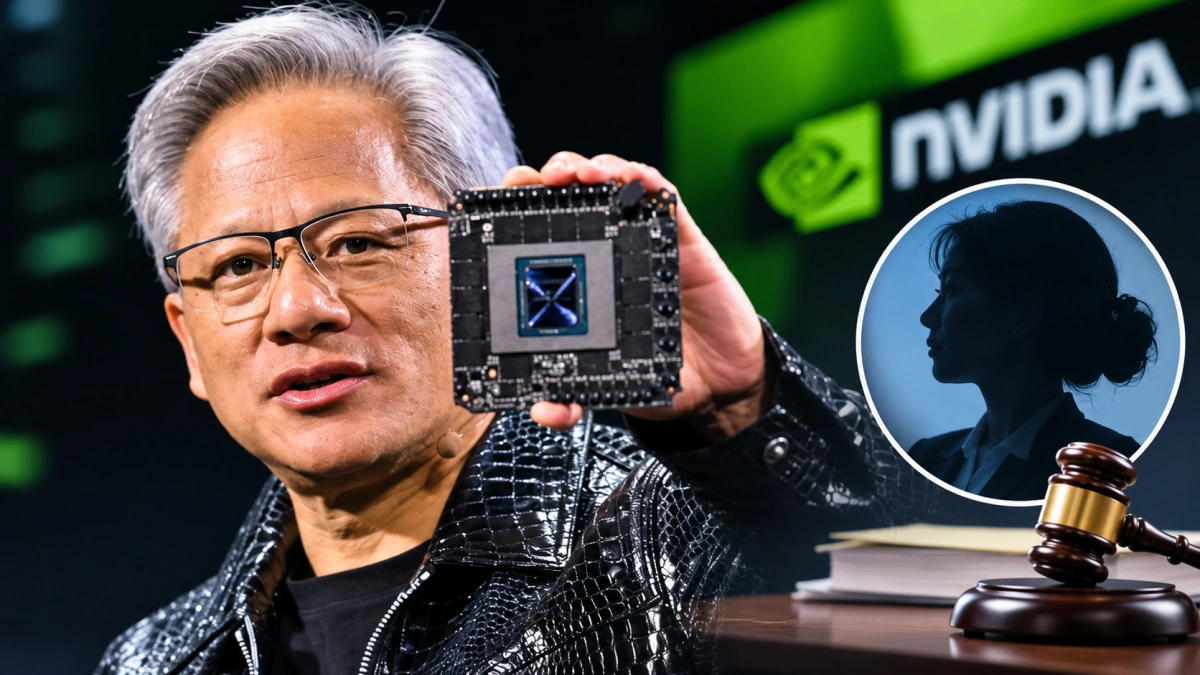
Silicon Valley’s Most Valuable Chipmaker Faces a Corporate Legal Storm
For the past three years, Nvidia stood as the undisputed engine of the global artificial intelligence boom, propelling CEO Jensen Huang to near-mythic status on Wall Street as the company’s valuation soared into the multi-trillions. Yet in late 2026, the semiconductor giant found itself engulfed in a dramatic national security and corporate governance crisis that briefly forced Huang to step down before making a stunning boardroom return—and left both the CEO and Nvidia’s directors fighting major federal shareholder lawsuits.
At the center of the legal firestorm are allegations swirling around Jensen Huang’s personal relationship with Alice Huang (no relation), a Chinese businesswoman and former executive at Singapore-based data center operator Megaspeed. Following U.S. intelligence and media reports alleging Alice Huang acted as an intelligence asset for China’s Ministry of State Security (MSS) while potentially helping circumvent strict U.S. AI chip export controls, outraged investors filed class-action and derivative lawsuits in federal court in California.
Understanding what these lawsuits actually claim—and why shareholders argue Nvidia misled Wall Street even after Jensen Huang returned to the helm—requires separating tabloid headlines from strict federal securities law.
Who Is Alice Huang, and How Does Megaspeed Fit Into the Scandal?
To grasp why a CEO’s personal affair triggered federal FBI, SEC, and shareholder probes rather than remaining a quiet HR headache, you have to understand Nvidia’s most sensitive geopolitical chokepoint: advanced AI GPU export controls.
Washington strictly bars Nvidia from shipping top-tier Blackwell and next-generation data center accelerators directly to mainland China over fears those chips power Chinese military AI and cyber operations. Because of those bans, third-party cloud and data center intermediaries operating across Southeast Asia—particularly Singapore—have drawn intense scrutiny from U.S. intelligence agencies looking for smuggling backdoors.
Enter Megaspeed, a Singapore-based data center firm that grew into a major buyer of advanced Nvidia AI chips. According to explosive U.S. intelligence assessments and media investigations that broke in late 2026:
- The Extramarital Relationship: Jensen Huang was reported to have carried on a concealed extramarital affair with Alice Huang, a former senior executive tied to Megaspeed.
- Alleged Intelligence Links: U.S. intelligence officials and media reports alleged that Alice Huang operated as an intelligence asset connected to China’s Ministry of State Security (MSS), raising immediate alarms over whether personal proximity to Nvidia’s CEO intersected with attempts to route restricted AI computing hardware or sensitive proprietary insights past U.S. export barriers.
What the Shareholder Lawsuits Actually Allege
Following the revelations—and the violent market volatility that wiped tens of billions off Nvidia’s market cap during the peak of the crisis—prominent securities plaintiffs, including suits led by the Rosen Law Firm and individual shareholders such as Mark Kistenmacher, filed federal class-action and derivative complaints in California.
Under U.S. federal securities law, investors cannot sue a CEO simply for having a messy personal life. Instead, the lawsuits zero in on corporate disclosure, material risk concealment, and board oversight:
Legal Claim Category
Core Accusation Against Nvidia & Jensen Huang
Misleading Compliance Assurances
Plaintiffs allege Nvidia publicly defended Megaspeed relationships and insisted internal compliance reviews found zero wrongdoing—artificially propping up stock prices
Concealed National Security & Conflict Risks
Failing to disclose Huang’s personal conflict of interest with an executive linked to a major chip buyer facing U.S. export scrutiny
Board Derivative Failures
Separate derivative suits accuse Nvidia’s Board of Directors of failing fiduciary oversight duties and ignoring red flags before media exposed the relationship
Investor Financial Harm
Shareholders who bought Nvidia stock before the scandal broke claim they overpaid for shares whose risk profile was materially misrepresented
1. Defending Megaspeed While Concealing the Conflict
According to court filings, when investigative reporters initially began questioning Megaspeed’s rapid acquisition of high-end GPUs and potential links to Chinese entities, Nvidia officials publicly defended the commercial relationship and stated its internal compliance team had uncovered nothing illegal. The lawsuits contend those reassurances were materially false and misleading because they omitted the glaring undisclosed conflict of interest between Nvidia’s chief executive and Megaspeed’s former executive—alongside severe geopolitical risks hanging over Nvidia’s export compliance.
2. Derivative Suits Targeting Nvidia’s Board
Alongside the investor class actions seeking financial damages for stock drops, shareholder derivative lawsuits take aim directly at Nvidia’s boardroom directors. Derivative plaintiffs argue the board failed to establish basic executive conflict-of-interest controls, left Nvidia exposed to simultaneous FBI counterintelligence scrutiny and SEC disclosure inquiries, and reacted slowly until external leaks forced an emergency internal board investigation.
3. Why Export Loopholes Through Third-Party Hubs Alarm Investors
Even beyond personal governance ethics, institutional investors recognize a huge financial threat sitting underneath Singapore and Southeast Asian data center purchases. If U.S. export regulators suspect advanced Blackwell or Hopper clusters shipped to third-party regional hubs are being quietly leased or redirected toward restricted Chinese entities, Washington can impose sudden licensing freezes, sweepingly stricter Know-Your-Customer (KYC) verification mandates on Nvidia’s distributors, or heavy compliance penalties. Any unexpected regulatory choke on Asian data center shipments directly threatens billions in quarterly revenue guidance—which is exactly why shareholders insist undisclosed ties to a key customer’s former executive constituted material market risk.
The Mid-November Resignation and Stunning Reinstatement Twist
Few corporate dramas in Silicon Valley history have spun faster than what unfolded inside Nvidia’s Santa Clara headquarters in mid-November 2026:
- Sudden Departure: Amid mounting pressure from federal investigators, plunging stock value, and an ongoing board probe, Jensen Huang briefly stepped down as CEO—sending shockwaves across global semiconductor supply chains and Wall Street AI portfolios.
- White House Intervention & Return: Almost as abruptly, following high-level national security reviews and public assurances from U.S. authorities and President Donald Trump confirming Huang’s leadership posed no national security threat to American interests, Nvidia’s Board of Directors moved to reinstate Jensen Huang as CEO.
- Stock Rebound—But Legal Risk Stays Put: While Nvidia’s stock recovered strongly after Huang regained the corner office, federal judges do not dismiss securities fraud or derivative claims just because a stock rebounds later. Shareholders who panicked and sold during the mid-November selloff—and institutional funds demanding governance reforms—continue pressing forward with litigation.
What Happens Next for Nvidia Investors?
In the months ahead, federal courts in California will consolidate competing lead-plaintiff filings and decide whether the class-action allegations clear the strict legal threshold required to prove scienter—meaning whether Jensen Huang or Nvidia’s leadership acted intentionally or with severe recklessness when making public compliance statements prior to the November disclosures.
For Nvidia’s long-term business, GPU demand from hyperscalers remains astronomical, and the board’s swift reinstatement signals Washington has no desire to cripple America’s premier chip champion during an intense global AI hardware race. Still, the Alice Huang affair leaves an indelible governance lesson on Silicon Valley: when a trillion-dollar company sits on the front lines of superpower national security, a CEO’s undisclosed personal ties are never purely private—they become material Wall Street risk that institutional investors and federal regulators will relentlessly scrutinize in open court.
Frequently Asked Questions (FAQ)
Why are shareholders suing Nvidia and Jensen Huang?
Federal shareholder class-action and derivative lawsuits accuse Nvidia, Jensen Huang, and board directors of misleading investors by concealing material conflict-of-interest and national security risks tied to Huang’s extramarital relationship with Alice Huang, a suspected Chinese intelligence asset linked to Nvidia customer Megaspeed.
Who is Alice Huang in the Nvidia scandal?
Alice Huang (no relation to Jensen Huang) is a Chinese businesswoman and former executive at Singapore-based data center firm Megaspeed, a large buyer of Nvidia AI chips. U.S. intelligence and media reports alleged she acted as an intelligence asset for China’s Ministry of State Security potentially tied to bypassing chip export controls.
Did Jensen Huang resign as CEO of Nvidia?
Yes, briefly in mid-November 2026 amid FBI/SEC scrutiny, an internal board probe, and severe stock volatility. However, following assurances from U.S. officials and President Donald Trump that his return posed no national security risk, Nvidia’s board reinstated him as CEO.
If Jensen Huang is back as CEO and the stock recovered, why are the lawsuits still active?
Under U.S. securities law, a later stock recovery does not erase losses suffered by investors who bought or sold shares during the drop caused by allegedly misleading compliance disclosures. Derivative suits also seek permanent corporate governance reforms inside Nvidia’s boardroom.
Are U.S. regulators still investigating Nvidia?
Yes. Alongside private shareholder litigation in California federal court, scrutiny from the SEC regarding corporate risk disclosures and ongoing U.S. export-control enforcement around third-party Southeast Asian data center buyers remains closely watched.





















Comments (0)
No posts yet
Be the first to comment!