

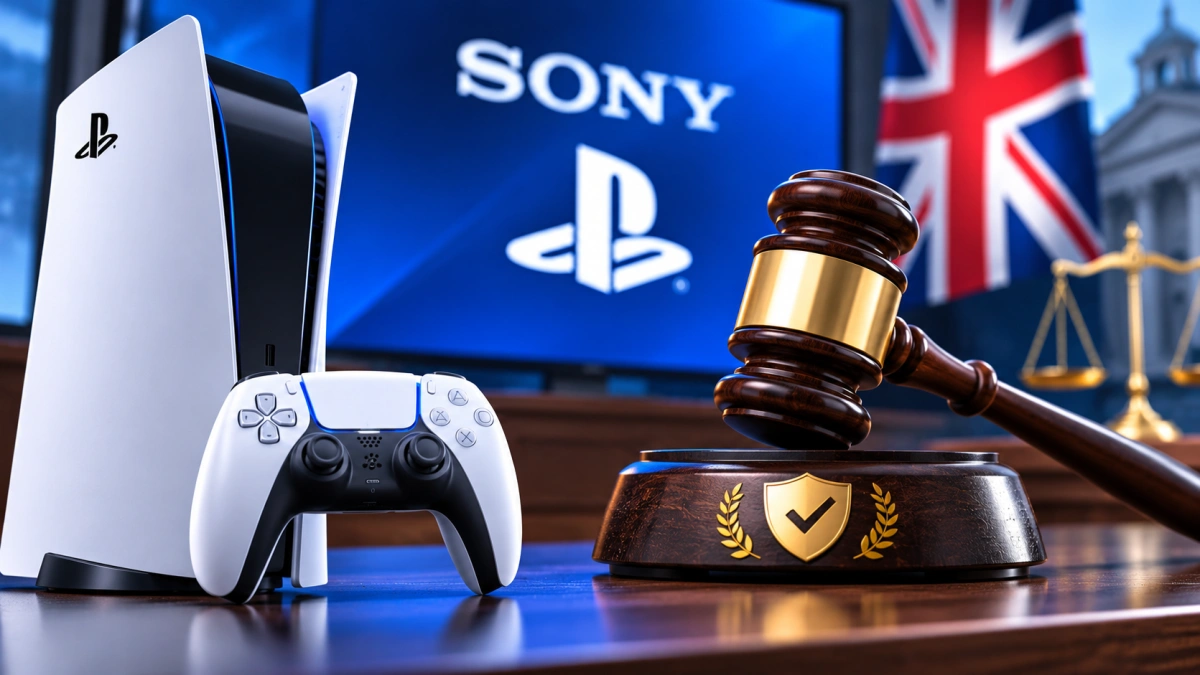
A Historic Antitrust Victory for PlayStation’s Closed Storefront Model
For more than four years, a massive legal cloud hung over Sony Interactive Entertainment’s digital business in Europe. Back in 2022, British consumer rights campaigner Alex Neill launched a landmark collective action seeking nearly £2 billion (roughly $2.6 billion) in damages on behalf of an estimated 12.2 million UK PlayStation gamers. The claim took direct aim at the financial backbone of modern console gaming: Sony’s exclusive control over digital PlayStation Store sales and its standard 30% developer commission.
In November 2026, following a closely watched trial that began back in March, London’s Competition Appeal Tribunal (CAT) delivered an unequivocal verdict. In a unanimous judgment, the tribunal dismissed the £2 billion claim against Sony in its entirety.
For gamers wondering why a court rejected arguments that digital console games cost too much—and for tech giants like Apple, Google, Microsoft, and Nintendo watching closely from the sidelines—this ruling marks a pivotal moment in how regulators define fair competition inside hardware ecosystems.
What the £2 Billion Class Action Accused Sony of Doing
Covering digital game and add-on purchases made by UK players between August 2016 and February 2026, the lawsuit argued that Sony abused a dominant market position under UK competition law. The claimants built their case around three straightforward criticisms that virtually every digital-first console owner has muttered at least once:
- The Digital Monopoly Lock-In: If you own a PlayStation 5 (especially the disc-free Digital Edition) and want to buy a downloadable game or microtransaction, you cannot visit Steam, Epic Games Store, or a discount third-party digital key shop. Sony phased out third-party retail download codes for full games years ago, funneling 100% of digital purchases through the PlayStation Store.
- The 30% Commission Cut: Sony charges third-party game publishers roughly 30% of every digital dollar spent on the PlayStation Store. Plaintiffs argued that because there is no competing storefront on PlayStation consoles, Sony had no incentive to cut that fee—and publishers passed those inflated costs straight onto consumers through £70 digital launch prices.
- Captive Ecosystem Harm: Once a player drops £450 on a PlayStation console and builds a library of friends and trophies, switching platforms is costly, allegedly turning PlayStation owners into a captive audience ripe for overcharging.
Why London’s Competition Appeal Tribunal Sided Completely With Sony
On the surface, those consumer complaints look persuasive—after all, we have watched Epic Games win major antitrust battles against Google’s mobile Play Store and force Apple into App Store concessions across Europe. So why did London’s Competition Appeal Tribunal throw out the PlayStation lawsuit unanimously?
The answer comes down to one foundational antitrust concept: how you define the relevant market.
Legal Battleground
Claimants’ Argument (Alex Neill)
Tribunal’s Unanimous Finding (CAT)
Market Definition
PlayStation digital games are a closed, single-brand monopoly market
Rejected. Sony competes inside a broad “systems market” against Xbox, Nintendo & PC
Physical Disc Alternatives
Digital buyers (especially Digital Edition owners) lack real alternatives
Physical discs at UK supermarkets & online retailers remain a genuine competitive check
Sony’s 30% Commission & Margins
Excessive, unfair pricing hurting 12.2 million UK buyers
Claimants failed to prove Sony’s margins were abusive or breached competition law
Final Verdict
Sought ~£2 billion ($2.6B) in collective payouts
Lawsuit dismissed in its entirety
1. Consoles Compete as Full “Systems,” Not Isolated App Stores
The tribunal firmly rejected the claimants’ narrow attempt to draw a legal circle solely around digital PlayStation Store downloads. Instead, judges accepted Sony’s argument that hardware and software operate as an interconnected “systems market.”
Before consumers ever buy a single game, they choose between Sony’s PlayStation, Microsoft’s Xbox, Nintendo’s Switch lineup, and gaming PCs. Console manufacturers frequently sell physical hardware close to cost—or even at thin margins—and spend billions subsidizing exclusive studios and network infrastructure, recovering those investments through platform software commissions. Because Sony faces fierce upfront competition from Xbox, Nintendo, and PC gaming for players’ wallets and living-room hours, it cannot blindly gouge gamers without losing market share across console generations.
2. Physical Discs Still Keep Digital Pricing in Check
Unlike iPhones—which have no physical cartridge slot—most PlayStation 4 and PlayStation 5 consoles in circulation include optical disc drives. The tribunal highlighted that UK players routinely buy cheaper boxed discs from Amazon, Argos, Smyths, and second-hand trade-in shops like CeX, creating a real commercial alternative that limits how far Sony can push platform pricing without driving buyers back to physical retail.
3. Failure to Prove Excessive Profit Margins
Even under UK abuse-of-dominance law, charging a standard industry 30% commission is not automatically illegal unless claimants prove the resulting profits are genuinely excessive relative to economic value and upfront R&D risk. After reviewing confidential financial evidence during the March 2026 trial, the tribunal concluded that Neill’s legal team simply failed to prove Sony’s net profitability was unlawful or anti-competitive.
4. Why Console Storefronts Differ From Smartphone App Stores
It is tempting to compare PlayStation directly against Apple’s iOS App Store or Google Play, especially after European Digital Markets Act rules forced mobile platforms to open up to sideloading and alternative payment rails. Yet regulators consistently recognize a major economic difference: consumers buy general-purpose smartphones at hefty unsubsidized profit margins and rely on them for banking, healthcare, and daily work. Dedicated game consoles, by contrast, operate as specialized entertainment appliances sold cheaply up front to expand an install base, subsidizing custom R&D chips and first-party studio budgets through a predictable 30% software cut.
Why This Ruling Matters Beyond the United Kingdom
Sony quickly welcomed the decision, calling it a decisive validation of its integrated console model and investment in game creators. Yet the broader war over console store commissions is far from finished:
- Possible UK Appeal: Alex Neill and her litigation funders can seek permission to appeal points of law to the UK Court of Appeal, though overturning unanimous factual findings on market definition is an uphill battle.
- Active Lawsuits Across Europe & Australia: Sony still faces parallel consumer class actions targeting PlayStation Store pricing in the Netherlands, Portugal, and Australia, where local judges and statutory frameworks may analyze digital lock-in differently.
- A Precedent for Nintendo and Xbox: Had Sony lost £2 billion in London, Nintendo and Microsoft would have immediately faced copycat lawsuits over the eShop and Xbox Store. Instead, this unanimous victory hands every major console maker a powerhouse legal blueprint defending the traditional subsidized-hardware, curated-storefront business model.
At a moment when digital-only console sales continue rising and massive blockbusters like GTA 6 break single-week store records, the CAT’s verdict ensures Sony’s digital storefront economics remain intact—for now. Still, rising hardware costs, digital subscription price hikes, and upcoming appellate battles across Europe guarantee that console store fairness will stay under fierce regulatory spotlights well into 2027. Gamers hoping for steeper digital discounts will likely need to rely on seasonal PlayStation Store sales, gift card promos, or sticking with disc-drive consoles that preserve retail competition. Meanwhile, independent publishers and digital consumer coalitions across Europe are closely studying London’s market-definition reasoning as they prepare fresh evidence around digital-only console buyers who literally lack optical drives to buy boxed discs and must pay full digital retail prices on every single major release.
Frequently Asked Questions (FAQ)
Why did Alex Neill sue Sony for £2 billion in the UK?
Consumer advocate Alex Neill filed a collective lawsuit in 2022 representing roughly 12.2 million UK gamers, claiming Sony abused a dominant position by locking out rival digital storefronts and charging an unfair 30% commission that inflated digital PlayStation Store prices between 2016 and 2026.
Why did the UK Competition Appeal Tribunal dismiss the case?
The tribunal unanimously rejected the claim because it found Sony competes inside a broader “systems market” alongside Xbox, Nintendo, and PC gaming, physical game discs provide a competitive alternative, and the claimants failed to prove Sony’s profit margins were illegally excessive.
Will UK PlayStation users receive any payout from this case?
No. Because London’s Competition Appeal Tribunal dismissed the lawsuit in its entirety, no compensation payouts will be issued to UK consumers unless a future appellate court overturns the decision.
Does this mean PlayStation Store game prices will drop?
Not directly. Because the ruling validated Sony’s current digital storefront model and 30% commission structure, Sony faces no court mandate to open the PlayStation console to third-party digital stores like Epic Games or lower its standard platform fee.
Is Sony facing similar PlayStation Store lawsuits in other countries?
Yes. While the £2 billion UK lawsuit was dismissed, Sony continues facing ongoing consumer claims over digital PlayStation Store pricing in jurisdictions including the Netherlands, Portugal, and Australia.
















Comments (0)
No posts yet
Be the first to comment!